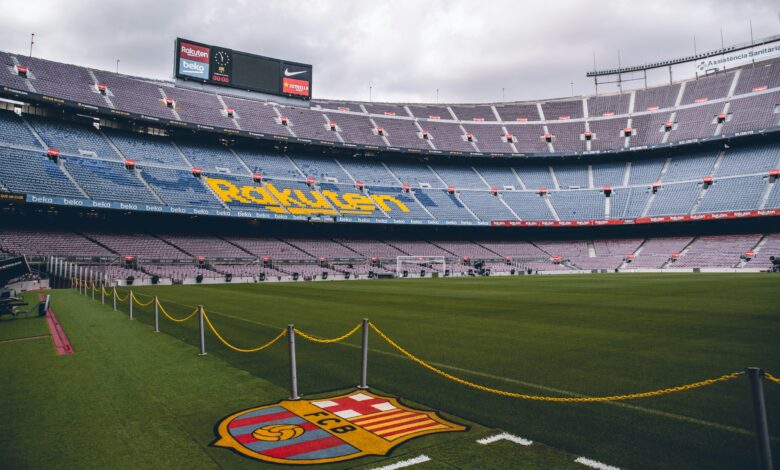
Thrilling Barcelona from 2020-21 to Present: Ultimate Players, Performance Guide

Introduction
Barcelona from 2020–21 to Present is transitioning and getting rebuild and the new generation players inside the team leading the team for their success and it is also known for its attacking football and strong focus on youth development. This article looks at Barcelona’s recent journey, key players, and team performance in the modern era. From 2020–21 to the present, the team has lived through a turbulent but fascinating era, moving from the end of the Messi cycle to a new generation led by La Masia talents and a reshaped squad. This article walks through Barcelona’s recent journey, highlights the most important players, explains season-by-season results in simple language, and breaks down how Xavi’s tactical ideas have shaped the team’s strengths, weaknesses, and future direction. The official FC Barcelona site contains the all over details about the team you can visit there as well.
Barcelona from 2020-21 to Present: Recent Journey
After Lionel Messi’s departure in 2021, Barcelona entered a true post‑Messi era, forced to adapt from a team built around one superstar to a collective structure with more responsibility on midfielders and young attackers. Financial problems, including wage‑cap issues and debt, pushed the club to sell players, renegotiate contracts, and rely heavily on academy graduates and smart signings rather than galáctico transfers.
Under these constraints, youth development became the club’s lifeline rather than just a tradition. Talents like Gavi, Alejandro Balde, and later Lamine Yamal were fast‑tracked into the first team, giving Barcelona fresh energy and a new identity that still respected the classic La Masia focus on technical quality and positional play.
Key Players and Their Roles
Attack
Robert Lewandowski arrived from Bayern Munich as the experienced number 9 tasked with guaranteeing goals while the rest of the squad was rebuilt. He combines intelligent movement in the box with strong hold‑up play, often dropping to link with midfielders while remaining the primary finisher in league and European matches.
Lamine Yamal represents the opposite end of the spectrum: a teenager from La Masia who broke multiple age records for Barcelona and La Liga while playing as a right‑sided winger. His dribbling and ability to decide big matches at a very young age have turned him into one of the most exciting attacking prospects in Europe.
Midfield
Pedri has become the creative brain of Barcelona’s midfield, often compared to Andrés Iniesta for his spatial awareness and ability to receive between the lines. When fit, he raises the team’s control in possession, connecting defense and attack with quick combinations and giving Barcelona the rhythm that Xavi’s style demands.
Frenkie de Jong brings verticality and ball‑carrying from deep, sometimes acting as a single pivot and other times as a roaming interior. His capacity to resist pressure and drive forward helps Barcelona progress the ball when opponents try to block short passing lanes in the first phase.
Gavi, another La Masia product, adds intensity and aggression to the midfield, pressing high and covering huge distances while still offering quality on the ball. He has often been used as an interior or even as a “false winger” on the left, helping overload central zones while still attacking the box.
Defense
Ronald Araújo has grown into Barcelona’s defensive leader, known for his pace in recovery and strength in duels against top forwards. He is crucial for protecting space behind the high defensive line that Xavi prefers, often being tasked with man‑marking dangerous opposition attackers in big games.
Alejandro Balde, another youth product, offers attacking thrust from left‑back with his speed and willingness to push high or come inside depending on the structure. His presence gives width and allows the left side to be more dynamic, especially when the right winger stays wide and the left interior tucks in.
Goalkeeper
Marc‑André ter Stegen remains the backbone of the team from the back, combining shot‑stopping with excellent distribution. In Xavi’s system, he is used as an extra outfield player in the first build‑up line, helping create a numerical advantage against high presses and starting many of Barcelona’s controlled attacks.
| Player | Position | Role in the Team |
|---|---|---|
| Robert Lewandowski | Striker | Main goal scorer and experienced leader in attack |
| Pedri | Midfielder | Creative playmaker who controls tempo and links play |
| Frenkie de Jong | Midfielder | Ball carrier who progresses play from deep areas |
| Gavi | Midfielder | High-energy midfielder known for pressing and intensity |
| Lamine Yamal | Winger | Young attacker providing creativity, pace, and dribbling |
| Alejandro Balde | Left-back | Attacking full-back offering width and speed on the left |
| Ronald Araújo | Defender | Defensive leader with strength and recovery pace |
| Marc-André ter Stegen | Goalkeeper | First-choice goalkeeper and key player in build-up play |
Young Talents
Gavi made his La Liga debut for Barcelona at 17 and quickly became one of the youngest starters in El Clásico history, underlining how rapidly the club trusted him at the top level. Fans are excited because his mix of work rate, bravery, and technical ability feels like a modern version of the traditional La Masia midfielder.
Lamine Yamal broke several records as the youngest starter, scorer, and assister for Barcelona in La Liga, and he featured in around 50–55 matches at just 16–17 years old. His breakout season included double‑digit goal contributions, making him central to Barcelona’s attack much earlier than anyone expected.
Alejandro Balde’s breakthrough came when he displaced older full‑backs by offering a much more explosive and modern profile on the left flank. Supporters see him as the long‑term solution at left‑back because he fits both the physical demands of up‑and‑down running and the technical demands of Barcelona’s passing game.
Season-wise Performance Summary
From 2020–21 onward, Barcelona’s seasons have followed a clear pattern: strong domestic pushes with mixed success in Europe and visible growth of the younger core. In La Liga, there have been years of title contention and at least one championship under Xavi, alongside seasons where inconsistency and injuries dragged the team away from first place despite a high number of wins.
A typical league campaign in this period has seen Barcelona play 38 matches and record a solid majority of victories, with a smaller share of draws and a handful of defeats, usually enough to finish in the top positions and often to challenge for or win the title. In the Champions League, however, the story has been more turbulent: early exits in some seasons, group‑stage disappointments, and campaigns where the team looked strong in individual games but lacked the stability to reach the very late rounds consistently.
In the Copa del Rey, Barcelona has continued to treat the competition seriously, often making deep runs and occasionally lifting the trophy as part of domestic doubles or strong national seasons. The Supercopa de España has sometimes served as an early‑season statement, with Barcelona using it to showcase their attacking football and give younger players a big‑match test, leading to at least one title win under Xavi.
In La Liga campaigns during this period, Barcelona has shown consistency at home, including strong performances like the Barcelona vs Osasuna at Camp Nou.
Lamine Yamal’s breakthrough continued into recent seasons, highlighted by his standout performance alongside Dani Olmo & Lamine Yamal’s recent brilliance in a crucial league comeback that showed Barcelona’s attacking depth.
Playing Style and Tactical Identity
Under Xavi Hernández, Barcelona returned to a possession‑heavy style built on structured positional play, short passes, and central overloads. The team typically starts from a 4‑3‑3 base shape that morphs into attacking structures like 3‑2‑5 or 2‑3‑5 in possession, with full‑backs pushing high or inverting and midfielders rotating to create passing triangles.
High pressing is a key principle: Barcelona often tries to win the ball back within seconds of losing it, especially in the opponent’s half, using compact lines and coordinated pressure rather than wild tackles. This counter‑pressing is supported by the energy of players like Gavi and Araújo and aims to keep the team spending more time attacking than defending.
La Masia remains at the heart of the tactical model, not just as a talent source but as an embedded philosophy. Youth players are taught the same positional ideas that the first team uses, which makes it easier for youngsters like Yamal, Balde, and Gavi to step into complex roles without losing fluency in possession.
Strengths and Weaknesses
Barcelona play with mix experience of youth. Lewandowski and ter Stegen and some senior players prefers to stay in calm situation even under the pressure moments, as it can increase the ability to take right decisions on the spot. At the same time players like Pedri, Gavi, Yamal and Balde adds energy and creativity. Together, this balance helps the team perform better and keeps their style of play strong. Because this mix feels balanced, Barcelona can stick to their identity even when one or two stars are off their game, instead of collapsing the way a more one‑dimensional squad might.
The midfield is where this really shows. When Pedri and Frenkie de Jong are on the pitch together, Barcelona can keep the ball for long spells and decide whether a match needs to be slowed down or suddenly accelerated. That control over rhythm is what allows the team to stay in charge of games, turn long periods of possession into chances, and protect the defense by simply not letting the opponent see much of the ball. Against many La Liga opponents, this has translated into long periods of possession and a steady accumulation of wins over a 38‑game season.
However, injuries have repeatedly hurt Barcelona’s consistency, particularly when Pedri, Gavi, or key defenders miss extended periods. Squad depth has not always matched the demands of competing in La Liga, the Champions League, and domestic cups simultaneously, meaning that when starters are absent, the drop in quality can be noticeable in high‑intensity games.
Defensive fragility in transitions has also been a recurring weakness; a high defensive line and aggressive pressing leave space behind, and if the first press is broken, Barcelona can concede chances too easily. In some seasons this has turned strong attacking performances into chaotic matches, reducing the team’s ability to close out games against top‑level opposition.
Conclusion
From 2020–21 to the present, Barcelona has lived a challenging but captivating chapter: adapting to life after Messi, surviving financial pressure, and rebuilding around a new generation of La Masia graduates. Under Xavi, the club recovered much of its traditional possession‑based identity, won domestic trophies, and saw stars like Pedri, Gavi, Balde, and Lamine Yamal emerge as symbols of the future, even if inconsistency and tactical growing pains prevented constant dominance at European level.
The current status of the team is that of a contender still under construction: capable of beating anyone on its day but still searching for deeper squad depth and more stable Champions League runs. Fans remain optimistic because the core of the project is young, technically gifted, and aligned with Barcelona’s DNA, suggesting that if the club can manage its finances and protect its talents, the next few years could bring both attractive football and more silverware.



Bravoooo, fabulous
Thanks for your appreciation.